Irish Gangster Whitey Bulger Captured in Santa Monica
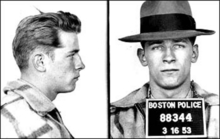
Authorities at a multiagency news conference in Boston praised their own persistence and tenacity in the capture of legendary crime boss James “Whitey” Bulger, and credited public service announcements for leading them to the fugitive in Santa Monica.
The announcements were launched Monday and Tuesday in 14 markets across the country where Bulger and his companion, Catherine Elizabeth Greig, 60, had been spotted or had past ties.
Bulger, 81, who has been on the run for more than 15 years, fled Boston in late 1994 as federal agents were about to arrest him in connection with at least 19 killings, racketeering and other crimes that spanned the early 1970s to the mid-1980s. He headed an organized crime group that allegedly controlled extortion, drug deals and other illegal activities in the Boston area.
I haven’t really been keeping up with these as I have been busy swooping fly girls in Cartagena, and despite the description of the Heistman in the Hollywood heist, “The man, described as well dressed and with slicked-back hair”, and “smooth manner and debonair appearance” my ski mask has remained in my dresser drawer as of late.
Daring Heist at Poker Tournament in Germany
A heavily armed group stormed a poker tournament in a German luxury hotel Saturday afternoon and made off with a jackpot, a police spokesman said.
Several participants at the tournament in Berlin’s Grand Hyatt hotel were slightly injured when they panicked and fled following the daring afternoon heist, Carsten Mueller said.
German Poker Tournament Robbers Still on the Run
Mueller said four robbers in disguises forced employees to hand over money, and then managed to escape. Mueller declined to give details, including how much money the men got away with.
The jackpot for the tournament stood at euro1 million ($1.36 million), according to a European Poker Tour Web site. The EPT confirmed the heist on the event’s blog in an official statement, saying there had been ”an armed robbery executed by six men.” It was unclear why the number differed from the police count.
Four Seasons Robbery: Billionaire In Town For Oscars Robbed In Hotel
A well-dressed man who talked his way into a Florida sugar baron’s hotel room and stole tens of thousands of dollars worth of jewelry is believed to be the same person who pulled similar scams on a Mexican soccer team, a salsa band and an Israeli basketball team when they visited Los Angeles, police said Tuesday.
The man, described as well dressed and with slicked-back hair, posed as a Four Seasons hotel employee when he struck up a conversation in an elevator on Friday with Jose Pepe Fanjul and his wife, Emilia, according to police. Later that night, he showed up at the couple’s room and told them he needed to fix a problem with an air vent. After he left, they discovered more than $45,000 in jewels missing.
“I haven’t seen any pictures yet but I’ve had many calls and I’ve had a description, and his appearance and M.O. sounds very much like a man we’re calling Ricco Suave,” said police Lt. Paul Vernon.
Authorities gave him that nickname because of his smooth manner and debonair appearance, he said.
In a Hollywood-style heist, thieves cut a hole in the roof of a warehouse, rappelled inside and scored one of the biggest hauls of its kind — not diamonds, gold bullion or Old World art, but about $75 million in antidepressants and other prescription drugs.
The pills — stolen from the pharmaceutical giant Eli Lilly & Co. in quantities big enough to fill a tractor-trailer — are believed to be destined for the black market, perhaps overseas.
“This is like the Brink’s pill heist,” said Erik Gordon, a University of Michigan business professor who studies the health care industry. “This one will enter the folklore.”
The thieves apparently scaled the brick exterior of the warehouse in an industrial park in Enfield, a town about midway between Hartford and Springfield, Mass., during a blustery rainstorm before daybreak Sunday. After lowering themselves to the floor, they disabled the alarms and spent at least an hour loading pallets of drugs into a vehicle at the loading dock, authorities said.
“Just by the way it occurred, it appears that there were several individuals involved and that it was a very well planned-out and orchestrated operation,” Enfield Police Chief Carl Sferrazza said. “It’s not your run-of-the-mill home burglary, that’s for sure.”
Experts described it as one of the biggest pharmaceutical heists in history.
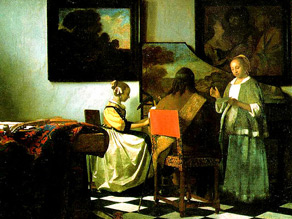
For 20 years, investigators have been chasing down hundreds of leads. They’ve interviewed countless witnesses all over the world, and still the central questions remain: where is the art and who did it?
What happened on March 18th, 1990 at Boston’s Isabella Stewart Gardner Museum? A a new portrait is now emerging about the famous heist, with some tantalizing details.
Investigators say at precisely 1:24 a.m., two men disguised as policemen knocked on the side door of the museum, saying they were called to look into a disturbance. The night watchman let them in.
Once inside, the thieves handcuffed both of the guards on duty, tied them up with duct tape and then, with free reign of the museum, they went to work.
But the question remains, who is behind the biggest art heist in history? Over the years there have been wild theories. Was it a fugitive mob boss? An eccentric art collector? Or just the work of local criminals?
“There are so many good suspects, it’s like an Agatha Christie novel where everybody’s sitting in the living room and everyone has a particular motive as to why they committed the crime,” says Kelly.
On the case for eight years, Kelly says DNA testing is now in play, but he won’t reveal details.
The Boston Globe reports that investigators may be analyzing the duct tape used to silence the guards. If there’s sweat on the tape, there’s a possibility of a DNA match, and the break investigators have been hoping for all these years.
The FBI has taken out ads, placing billboards on the highway, offering a $5 million reward for any information that leads to the safe return of the artwork.
There are two crimes in the matter: the actual theft of the artwork, for which the statute of limitations ran out in 1995.
And then, there’s the second crime: possession of stolen art. There is no statute of limitations on that, which is why the U.S. Attorney’s Office is now offering immunity. Prosecutors say if someone comes forward with the art, all will be forgiven.
Michael Porfirio Mason
AKA The Peoples Champ
AKA GFK, Jr.
AKA The Sly, Slick and the Wicked
AKA The Voodoo Child
The Guide to Getting More out of Life
http://www.thegmanifesto.com
Nobody Move Gimmie The Loot(Eazy-E and Notorious B.I.G)
Thieves in Brazil have stolen more than £5m ($6m) from a cash delivery firm, taking advantage of the nation’s passion for football, police say.
Police believe the robbers
in Sao Paulo – who had dug a tunnel into the firm’s building – struck when season-ending football matches were played on Sunday.
A security guard later told local media he had heard a loud noise but thought it was fireworks lit by fans.
The theft was only discovered on Sunday evening – after the matches had ended.
Sao Paulo police allege the thieves rented a house in the area about four months ago and then painstakingly dug a 100m-long (110 yards) tunnel to the office of the company.
Officers believe the robbers struck late on Sunday afternoon – as millions of people across Brazil were watching the football season’s finale.
Firefighters later inspected the tunnel and found abandoned maps and tools, the police said.
During their stay in the house, the thieves disguised themselves as residents, even putting a Christmas tree in the window, the Globo website reported.
Like Irish G Manifesto Hall of Fame Member, Willie Sutton supposedly said, “because that’s where the money is.”
4 months, $6 million in cold CASH. Who says you can’t make money in a Down Economy?
These guys kind of took a page out of The G Manifesto Playbook. I often “heist” guy’s girlfriends while guys are watching American Football with their friends.
Michael Porfirio Mason
AKA The Peoples Champ
AKA GFK, Jr.
AKA The Sly, Slick and the Wicked
AKA The Voodoo Child
The Guide to Getting More out of Life
http://www.thegmanifesto.com
G’s broke into reality star Kourtney Kardashian’s southern California home this weekend and stole tens of thousands of dollars worth of jewelry, according to reports.
Among the items the pregnant starlet reported missing were her $30,000 Cartier watch, Disick’s Rolex and various pricey diamond pieces.
Thieves also took off with Kardashian’s vintage jewelry left to her by her late dad, Robert Kardashian, a prominent lawyer who helped defend O.J. Simpson in his murder trial, TMZ reported.
Kardashian, whose family owns several high-end boutiques, is the latest young starlet to be victimized by burglars.
In the last 10 months, thieves have broken into the homes of Paris Hilton, Lindsay Lohan, Audrina Patridge, Hayden Panettiere and Rachel Bilson, People.com reported.
Back in the days of our fathers and uncles, Heistmen used to “prospect” from high society mags to see the jewelery women were wearing. Or go to the library.
Still, you had to do a lot of leg work and research before wacking a crib.
Reality TV is the Heistman’s best friend (and Google Maps). You get the whole layout of the crib on a silver platter.
If people were smart (a ridiculous notion I know in the era of Ed Hardy Shirts), they would go back to the days of being low profile.
Michael Porfirio Mason
AKA The Peoples Champ
AKA GFK, Jr.
AKA The Sly, Slick and the Wicked
AKA The Voodoo Child
The Guide to Getting More out of Life
http://www.thegmanifesto.com
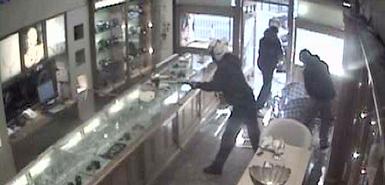
A motorcycle gang grabbed £2 million of jewels from an exclusive London store in just 39 seconds in a raid captured in dramatic detail on CCTV.
Six robbers on three motorcycles roared up the pavement to Mozafarian jewellers opposite Harrods in Knightsbridge.
One of the robbers smashed open the glass door with a sledgehammer before the gang, all wearing crash helmets, stormed in and smashed open display cabinets.
The haul of gems included a £500,000 diamond necklace. However, the robbers were unable to break their way into one display case containing further £3 million of gems.
Pouya Nikomagham, a sales assistant at Mozafarian, said that the highly organised gang members did not say a word as they raided the store.
“They were very professional, they knew what they were doing and where to go,” said Mr Nikomagham.
Michael Porfirio Mason
AKA The Peoples Champ
AKA GFK, Jr.
AKA The Sly, Slick and the Wicked
AKA The Voodoo Child
The Guide to Getting More out of Life
http://www.thegmanifesto.com